Hey - I hope you're doing well.
Back in college, I fell out of bed more than once.
Not metaphorically — and no, not involving alcohol.
Every few months, my morning routine started with crumbling to the floor — my legs too sore from the prior day’s workout to hold my weight.
And the craziest part? I was low-key happy with myself whenever it happened.
It meant I’d left it all out on the field. No pain, no gain, right?
Now, looking back? Boy, I was wrong.
In 2019, my coach introduced me to a concept that changed everything — not just how I trained, but how I approached health entirely.
It's called RPE: Rate of Perceived Exertion.
Train Smarter, Not Harder
RPE is a self-reported scale of exercise intensity from 1 to 10.
RPE 10 means absolute failure — nothing left in the tank. RPE 8 means you have about 2 reps left, and RPE 7 means you could do 3 more if you had to.
When my coach first explained this, I was skeptical.
"How could I progress while giving less effort?"
It felt backwards. Lazy, even.
But here's what the research shows: training in the RPE 7-9 range produces equivalent — and often better — results than constantly pushing to failure.
Why?
Because when you train to absolute failure every session, you're not just taxing your muscles. You're taxing your nervous system, your recovery capacity, and your ability to show up the next day.
Those days I fell out of bed? I skipped the gym entirely - my body forced me to rest whether I wanted to or not.
Now, six years into using RPE, I've made more progress than I did in all those years of grinding myself into the ground.
I'm stronger. I recover faster. I actually enjoy training.
And most importantly, I can show up for the rest of my life. My work. My relationships. The things that actually matter.
The Real Lesson
Here's the truth that took me years to learn:
We cannot optimize everything at once.
You're juggling a job, relationships, bills, maybe kids or aging parents — and maybe all of the above.
And somehow, you're also supposed to find the time to also meal prep, exercise, meditate, and optimize your sleep. All while maintaining your sanity?
It's exhausting just thinking about it.
So what do we do?
We go all in. We wake up early, work out every day, and white-knuckle our way through our to-do lists.
We try to live at an RPE 9…
And here’s the dangerous part: it actually works for a few weeks.
We see quick results & feel excited.
Then life does its thing — a stressful new project, sickness, or an unexpected challenge — and we crash. Hard.
We skip the gym for weeks. Miss meals some days & order greasy takeout for others. Stay up late watching Netflix because we’re too tired to do anything else & too wired to sleep.
And we blame ourselves for not having enough discipline.
But here's what I've learned: the problem isn't discipline. It's strategy.
As we discussed last week, wellness isn’t one-size-fits-all.
Just as we can’t copy others’ routines, we also can’t do it all at once.
You can do anything you want — just not everything at once.
The key is choosing consciously & effectively.
What If You Only Focused on One Thing?
Here's the shift that changed everything for me:
Health isn't about doing everything. It's about doing the right thing until it builds momentum.
When I started healing Hashimoto's, I didn't overhaul my entire life overnight.
I picked one thing: eating breakfast.
That's it. A fiber & protein-rich meal first thing in the morning.
Within two weeks, something shifted.
My blood sugar stabilized. The brain fog lifted. I could finally focus past 4 PM.
And here's the beautiful part: when I felt better, I had the capacity for more.
I started reading about healing the immune system. Then I added in HIIT cardio once a week, and now, I’ve finally made my way back to writing to you.
Each change was built on the last — not because I forced it, but because I finally had the energy to lean in.
This is how momentum works.
You don't need to fix everything at once. You need to fix one thing well enough that it opens the door to the next thing.
The Question To Ask
Most people ask: "What do I need to do to get healthy?"
That's the wrong question. It’s not specific enough.
Here’s a better one:
"What's the one change that would give me the most energy back?"
Before you read on, pause. Actually ask yourself that question.
Whatever comes up, honor it. That’s a path for you right now.
Here are some things that have worked well for me over the years:
Drinking water with lemon & salt first thing in the morning
Avoiding social media for the first hour of the day
Taking a 10-minute walk after lunch
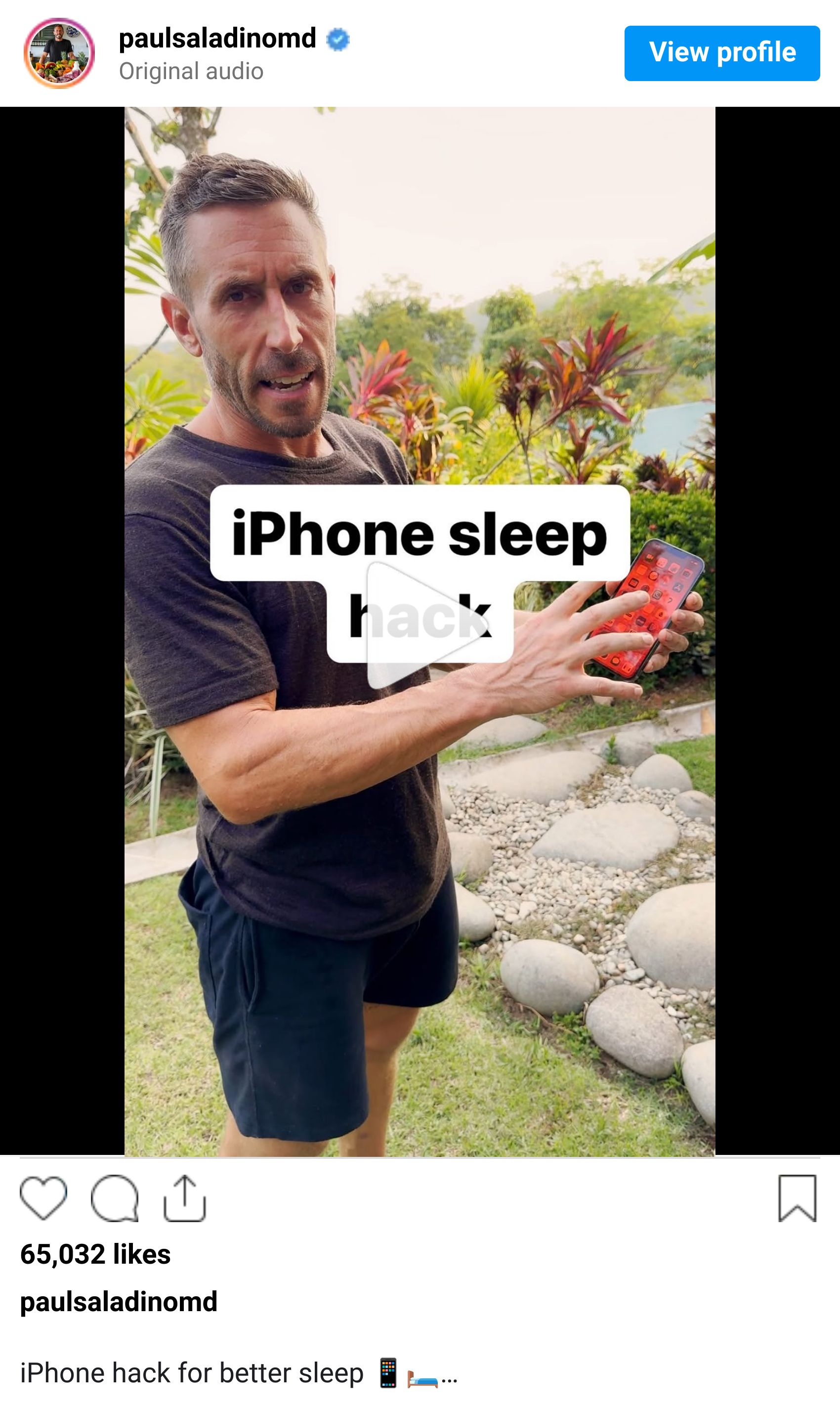
Setting my iPhone to red light mode at bedtime (instructions below)
Writing down 3 wins & 3 lessons from each day
None of these are glamorous, and they certainly won’t be going viral.
But they work. Because they're simple, sustainable, and generative.
When you feel better, everything else gets easier.
Your work improves. Your relationships deepen. You have the capacity to take on bigger changes.
Health isn't the thing you do after you handle everything else.
It's the foundation that makes handling everything else possible.
Start with One Thing
Here’s the good news: You don't need to work harder. You don’t need more information.
You just need to pick one thing & commit to it.
Ask yourself again: “What's the one change that would give me the most energy back?"
Then give it two weeks. Let it work.
Here’s what happens when you do: Momentum compounds.
You feel better. So you make better choices.
Better choices help you feel even better.
It’s a virtuous cycle.
And slowly, without forcing it, the life you've been chasing starts to flow.
Thanks for reading.
I'd love to hear from you — if you could only focus on one health change right now, what would give you the most energy back?
With gratitude,
Aidan
Go from AI overwhelmed to AI savvy professional

AI will eliminate 300 million jobs in the next 5 years.
Yours doesn't have to be one of them.
Here's how to future-proof your career:
Join the Superhuman AI newsletter - read by 1M+ professionals
Learn AI skills in 3 mins a day
Become the AI expert on your team
What 200K+ Engineers Read to Stay Ahead

Your GitHub stars won't save you if you're behind on tech trends.
That's why over 200K engineers read The Code to spot what's coming next.
Get curated tech news, tools, and insights twice a week
Learn about emerging trends you can leverage at work in just 5 mins a day
Become the engineer who always knows what's next
iPhone Red Light Mode Setup
(This removes blue light at night, helping you sleep better)
Go to Settings → Accessibility
Display and Text Size
Scroll to Color Filters → Turn ON
Set Intensity almost all the way to the right
Set Hue almost all the way to the right
Go back to Accessibility
Scroll to Accessibility Shortcuts (at the bottom)
Select Color Filters
Now you can triple-click your side button to toggle red light mode on/off.